Redefining Quality & Release at Tinder
Suneet Malhotra
Sep 9, 2025
The Challenge: QA as a Bottleneck
When I joined Tinder as Engineering Manager II, we faced a critical challenge: our bi-weekly release cadence was becoming a bottleneck. The mobile QA process was manual, time-intensive, and created friction that slowed down feature delivery for millions of users. Every release required extensive manual testing, creating a "gatekeeper" dynamic where QA was seen as the blocker rather than an enabler.
The question wasn't just how to test faster—it was how to fundamentally redefine the role of quality in our release lifecycle.
TL;DR: Key Takeaways
- Transformation: From "QA as a Bottleneck" to "Quality as an Enabler"
- AI-Driven Automation: Smart test selection and risk-based automation strategies
- Culture Shift: Shared ownership model across engineering and product teams
- Results: Faster releases with improved quality metrics
- Presented At: BrowserStack World Tour 2025, New York
The Strategic Shift: From Bottleneck to Enabler
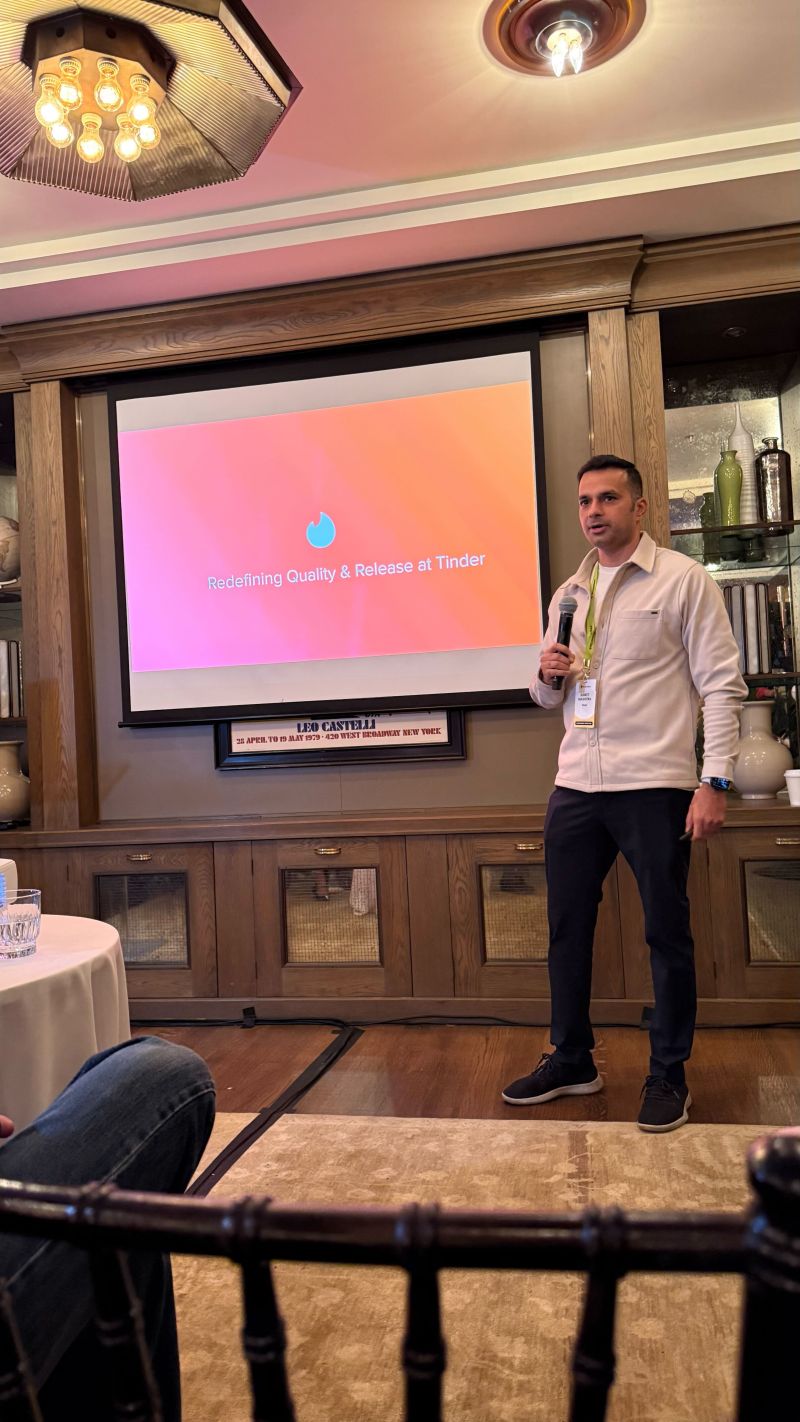
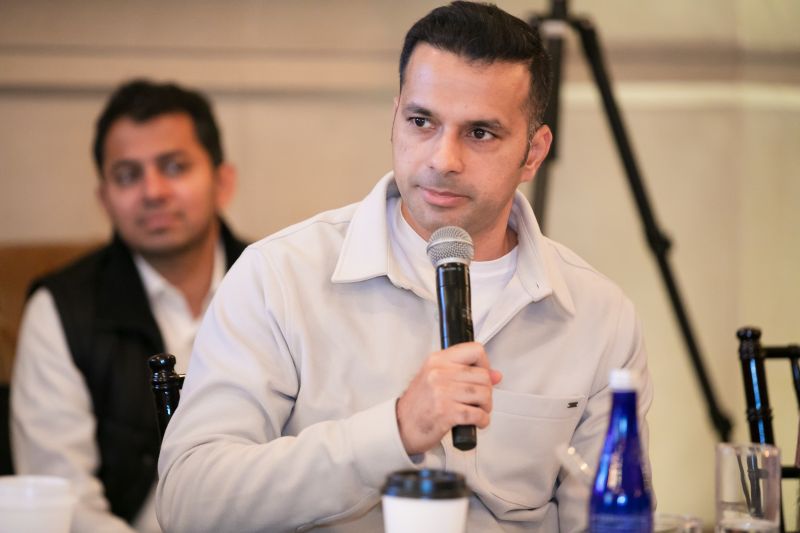
At the BrowserStack World Tour 2025 in New York, I shared how we transformed Tinder's quality engineering approach through four strategic pillars:
1. Identifying Bottlenecks: The Speedboat Game & CALMSS Model
Before we could solve the problem, we needed to understand it. We used the Speedboat Game—a collaborative exercise where the entire engineering organization identified what was "anchoring" our release velocity.
Key Bottlenecks Identified:
- Manual regression testing consuming 40+ hours per release
- Lack of visibility into quality risks before code reached QA
- Fragmented ownership where developers and QA operated in silos
- No data-driven approach to prioritize what to test
We then applied the CALMSS model (Culture, Automation, Lean, Measurement, Sharing, Sustainability) to systematically address each bottleneck. This framework helped us move from reactive firefighting to proactive quality engineering.
2. Building a Culture of Shared Ownership: Embedded Testing
The most transformative change wasn't technical—it was cultural. We moved from a model where QA "owned" quality to one where every engineer owned quality.
Embedded Testing Principles:
- Developers write unit and integration tests as part of feature development
- QA engineers act as quality consultants, not gatekeepers
- Shared responsibility for test maintenance and flakiness
- Quality metrics visible to all stakeholders in real-time dashboards
This cultural shift reduced the "us vs. them" dynamic and created alignment around a shared goal: shipping high-quality features faster.
3. Smart Test Selection: Risk-Based Automation
One of the biggest misconceptions in QA is that "more tests = better quality." We implemented Smart Test Selection—a risk-based approach that optimizes for CI/CD speed without sacrificing coverage.
Our Smart Test Selection Strategy:
Critical Path Automation: We identified the 20% of features that impact 80% of user journeys and prioritized automation there first. This moved us from 0% to 30% regression coverage in under 10 months.
Risk-Based Prioritization: Tests are categorized by:
- P0 (Critical): Payment flows, authentication, core matching logic
- P1 (High): Profile features, messaging, discovery
- P2 (Medium): Edge cases, nice-to-have features
Intelligent Test Execution: Instead of running all tests on every commit, we:
- Run P0 tests on every PR
- Run P1 tests on staging deployments
- Run P2 tests on a nightly schedule
- Use code change analysis to determine which tests to run
This approach reduced CI/CD execution time by 60% while maintaining the same level of quality confidence.
4. AI-Driven Automation: Appium + Cursor + BrowserStack
The technical foundation of our transformation was AI-driven test automation. We built a self-healing automation framework using:
Technology Stack:
- Appium + TypeScript: Modern, type-safe mobile automation
- Cursor AI: AI-assisted test generation and maintenance
- BrowserStack: Parallel execution across hundreds of real devices
- Custom Self-Healing Framework: AI-powered selector recovery
The Impact:
- 30% boost in team throughput: Engineers spent less time maintaining flaky tests
- 70% reduction in production hotfixes: Despite moving to weekly releases
- Reliable CI/CD gates: Automation became a trusted quality signal, not a source of false positives
Automated Pipelines and Continuous Improvement
Beyond the initial transformation, we built continuous improvement into our quality engineering process:
Automated Quality Dashboards:
- Real-time visibility into test execution trends
- Predictive risk assessment using historical data
- Executive-level reporting for release readiness
Feedback Loops:
- Post-release retrospectives to identify quality gaps
- Automated alerts when test flakiness exceeds thresholds
- Regular calibration of test priorities based on production data
Infrastructure as Code:
- Version-controlled test suites
- Automated test environment provisioning
- Self-service test execution for developers
The Results: Quality as an Enabler
The transformation from "QA as a Bottleneck" to "Quality as an Enabler" delivered measurable business impact:
Velocity:
- 100% increase in release frequency: Bi-weekly → Weekly releases
- 60% reduction in CI/CD execution time through smart test selection
- 30% boost in team throughput with AI-assisted automation
Quality:
- 70% YoY reduction in production hotfixes despite faster shipping
- Zero regression in release quality during the transition
- 30% regression coverage achieved in under 10 months (from 0%)
Culture:
- Developers and QA aligned around shared quality goals
- Quality metrics visible and actionable for all stakeholders
- Executive confidence in release readiness through data-driven dashboards
Key Takeaways for Engineering Leaders
-
Quality is a Culture, Not a Department: The most impactful change was shifting from QA "owning" quality to everyone owning quality.
-
Smart Testing > More Testing: Risk-based test selection and intelligent execution optimize for both speed and coverage.
-
AI is a Force Multiplier: AI-driven automation doesn't replace engineers—it amplifies their impact by handling repetitive maintenance.
-
Data-Driven Quality: Predictive dashboards and historical analysis turn quality from reactive to proactive.
-
Shared Ownership Scales: When developers and QA are aligned, quality becomes a competitive advantage, not a bottleneck.
Looking Forward
The journey doesn't end here. We're continuing to evolve our quality engineering approach with:
- Local LLM Integration: Using Ollama for self-healing tests to reduce API costs
- Predictive Quality Models: ML-based risk assessment for new features
- Self-Repairing Code: Automated PRs to update selectors when UI changes
Quality engineering at scale isn't about having the most tests—it's about having the right tests, run at the right time, with the right culture supporting them.
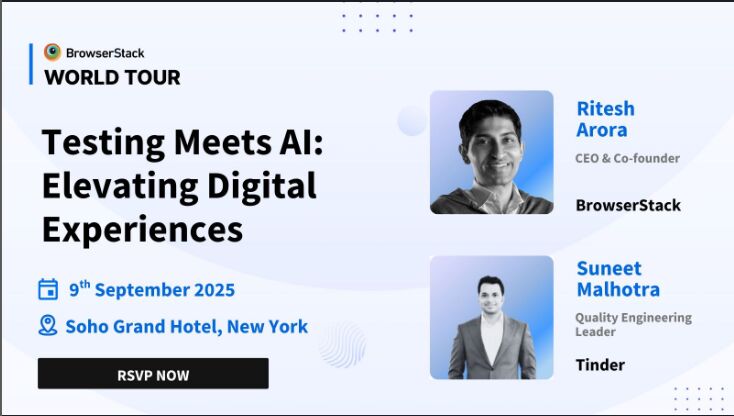
Presented at BrowserStack World Tour 2025, New York (Soho Grand Hotel) on September 9, 2025. Session: "Testing Meets AI: Elevating Digital Experiences" alongside Ritesh Arora, CEO & Co-founder of BrowserStack.
Share this post
You Might Also Like
Building Shape Popper: A Kid-Friendly iOS Game with SwiftUI & Claude Code
Step-by-step guide on building Shape Popper, a high-performance SwiftUI game for kids using Claude Code. Learn about Canvas rendering, MVVM architecture, and iOS accessibility for ages 4-6.
Engineering LeadershipBuild a Project Management App with Claude Code in 15 Minutes
A step-by-step guide to building Flowstate with Claude Code, Next.js, and Supabase. Learn how to use /frontend-design for a custom Editorial Brutalism aesthetic and deploy a fully functional project management app in 15 minutes.
AI & AutomationTest AI Latency from First Token to Finished Answer
A fast first token can hide a late or invalid answer. Test queueing, streaming, and completion with a synthetic workload before accepting a model-serving change.
AI & AutomationTest the Trace Before You Trust the Dashboard
A correct AI answer can hide a broken trace. Use a synthetic request and a deliberately stripped context header to test whether your debugging evidence survives service boundaries.
Latest Blog Posts
Test AI Latency from First Token to Finished Answer
A fast first token can hide a late or invalid answer. Test queueing, streaming, and completion with a synthetic workload before accepting a model-serving change.
Test the Trace Before You Trust the Dashboard
A correct AI answer can hide a broken trace. Use a synthetic request and a deliberately stripped context header to test whether your debugging evidence survives service boundaries.
The Evaluator Needs an Abstain State
A judge that must choose pass or fail will turn uncertainty into false confidence. Add an abstain state, calibrate it, and test the cases where the evaluator should refuse to decide.
Related Tools & Demos
The QA Field Manual to Language Models
A free 24-chapter book. Start at “what is AI, really?” and finish with a small language model you built yourself — one that reads a failing Playwright test and proposes a fix you can run. Read it in your browser, or download the PDF or the Mac app.
View Source Code →Multi-Model LLM Harness
One interface to call any AI model — capability routing, fallback chains, budgets, circuit breakers, and a quality feedback loop. A practical architecture pattern write-up.
Automated Trading System
Multi-engine trading platform with real-time risk management, regime-based strategy selection, and automated order execution.
View Source Code →
Stay in the Loop
Get weekly insights on AI-driven QA, engineering leadership, and automation strategies.
No spam, ever. Unsubscribe anytime.